
Selling a property in Torrevieja involves much more than taking photographs, writing a listing and waiting for enquiries.
To move forward with a clear plan, decide before publishing: when to sell, how to prepare the property, which documents to review, how to set the asking price and how enquiries will be managed.
Not every property or homeowner starts from the same position. The plan should be adapted to the home and the purpose of the sale.
The route to a well-prepared sale
1. Define why you want to sell and your timeframe
Before discussing price, clarify what you want the sale to achieve.
- Do you need to sell before buying another property?
- Is the property vacant, rented or used seasonally?
- Are several owners involved in the decision?
- Is there an important date that could affect the process?
- Would you prefer to prioritise speed, price or flexibility?
These answers affect the marketing strategy, availability for viewings and the way negotiations are handled. A realistic plan should take both the market and the homeowner’s circumstances into account.
2. Review the Land Registry and cadastral information
Before marketing and selling a property in Torrevieja, check that the available information matches the property as it stands.
A Spanish Land Registry extract (nota simple) shows the registered property details, ownership and any recorded charges or restrictions. You should also locate the title deed and check the cadastral reference, which officially identifies the property.
If there are discrepancies involving the floor area, ownership, layout or charges, it is better to identify them early and obtain advice on how to resolve them before negotiations progress.
3. Organise the necessary documents
The exact documents vary according to the property, but preparing the usual paperwork in advance can prevent delays later.
The information that may be required includes:
- title deed or proof of ownership;
- identity documents for the registered owners;
- an up-to-date Land Registry extract (nota simple);
- the cadastral reference and latest IBI property tax receipt;
- a certificate from the owners’ association confirming the payment status, where applicable;
- a registered energy performance certificate;
- information about mortgages, charges, tenancies or occupants;
- any planning or occupancy documents applicable to the property.
In the Valencian Community, the energy performance certificate must be registered before the sale. Its energy rating must also appear in the property offer, marketing or advertising when required.
Ask the professionals involved in the transaction to confirm which documents are required for your particular case.

4. Set the asking price on a sound basis
To sell a property in Torrevieja with a coherent strategy, the asking price should not be based solely on other listings. Advertised prices do not always match the final accepted price, and two properties in the same area may differ significantly.
Factors to consider when making the decision include:
- the precise location and surroundings;
- floor area and layout;
- condition;
- floor level, lift access, orientation and outdoor space;
- garage, storage room or communal areas;
- documentation status;
- competing properties available at the time;
- the type of buyer the property may appeal to.
An excessively high price can reduce initial interest and prolong the time on the market. A price set without sufficient analysis may also limit the result. The decision should be based on comparable information and a strategy that can be reviewed.
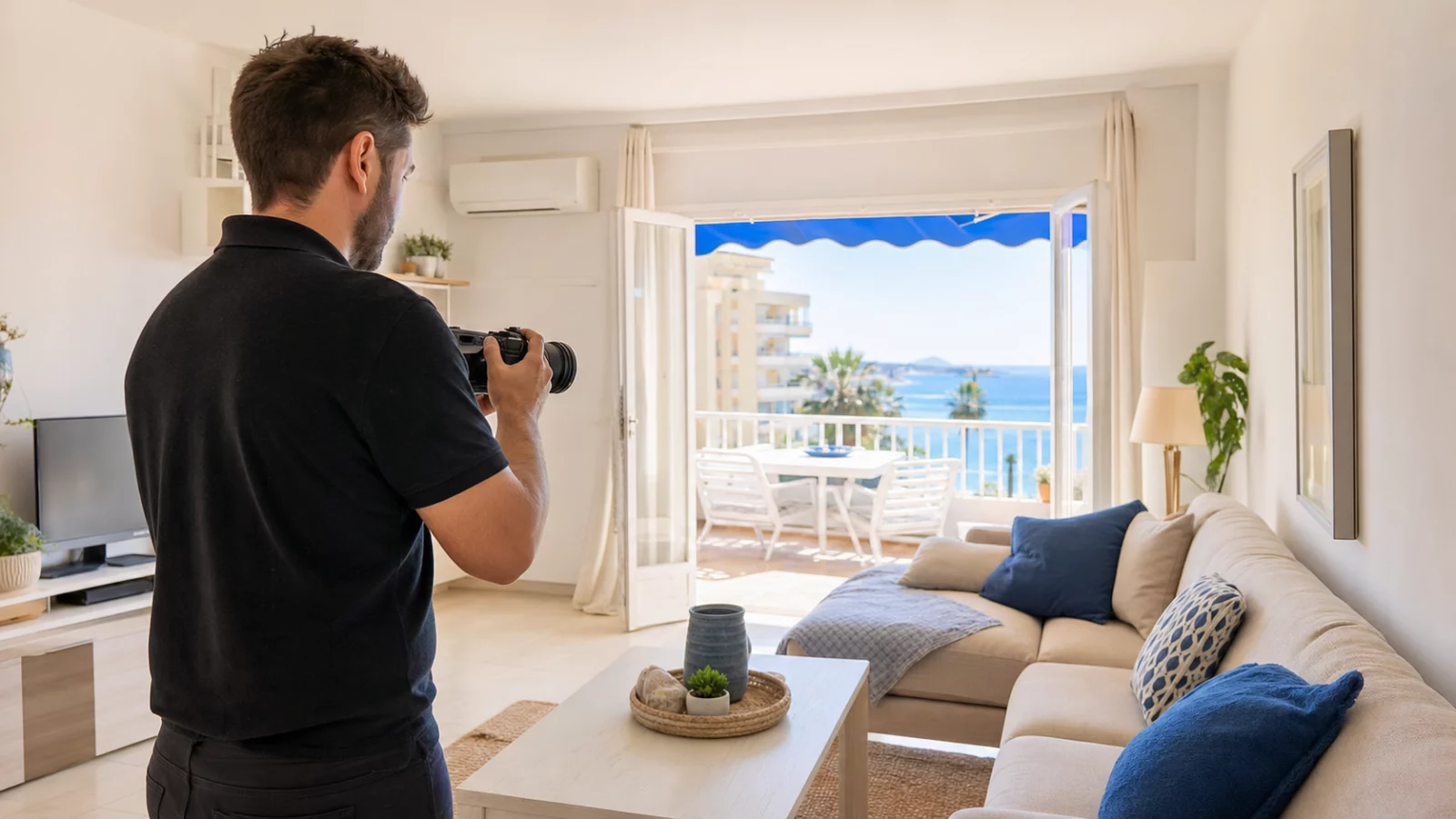
5. Prepare the property before the photographs
The first impression usually happens on a screen. Preparation should therefore begin before the photography takes place.
A renovation is not always necessary. It is often more useful to:
- declutter and reduce personal items;
- improve the lighting;
- address small visible defects;
- clean windows, terraces and outdoor areas;
- show the purpose and dimensions of each room clearly;
- identify the property’s genuine strengths.
Photographs, video and copy should present the property attractively but accurately. Creating expectations that do not match the viewing leads to unsuitable enquiries and wastes everyone’s time.
6. Design a marketing plan
To sell a property in Torrevieja to a broad market, publishing on several portals is not a strategy in itself. Before launching the property, define:
- the target buyer profile;
- which distinguishing features will be communicated;
- which visual materials are needed;
- which channels and languages will be used;
- how enquiries will be answered and qualified;
- how viewings will be organised;
- when the price, message and results will be reviewed.
In an international market such as Torrevieja, the information should also be clear to buyers who are still outside Spain. This does not mean automatically translating the same listing; it means explaining the property, its situation and the next step properly.
7. Qualify enquiries and organise viewings
Not every enquiry comes from someone at the same stage of the buying process. Good initial qualification helps distinguish an early enquiry from a buyer who is ready to move forward.
Before arranging a viewing, it may be useful to know:
- what type of property the person is looking for;
- which areas they are considering;
- their approximate timeframe;
- whether they require financing;
- who is involved in the decision;
- whether they are in Spain or arranging a trip.
After each viewing, recording questions and objections helps identify patterns. This information can be used to improve the property presentation or review the strategy if necessary.
8. Negotiate clearly and review everything before signing
When an offer is made, price is only one of the points to review. The timeframe, payment method, conditions, included items and handover date also matter.
It is common for buyer and seller to sign a private document before the public deed, but its terms create obligations for both parties. Any reservation agreement, deposit contract or sale document should therefore be reviewed before signing.
The transaction normally concludes with the public deed and the agreed handover. Tax and costs depend on the circumstances of the transaction and the owner, so they should be confirmed with professional advice.
Sell a property in Torrevieja with a clear plan
Preparing the documentation, setting a pricing strategy and defining how the property will be presented and managed reduces improvisation. It also gives each decision a clear rationale and helps the homeowner understand what is happening at every stage.
If you are considering selling a property in Torrevieja, you can talk to Fuster & Co to review your property’s starting point and decide what the next step should be.
This content is for information only and does not replace the legal, tax, technical or notarial advice applicable to each transaction.
Official sources consulted
- General Council of Notaries: property and real estate
- Spanish Registrars: Land Registry extract
- Spanish Cadastre: cadastral reference
- Valencian Government: energy performance certificate registration
- Spanish Official Gazette: Royal Decree 390/2021 on energy certification
Do you want to sell a property in Torrevieja?
Leave your details and we will contact you to understand your property’s starting point and the goal of the sale.