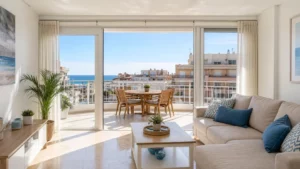
A property viewing in Aguas Nuevas is the moment to test whether the home works in practice—not simply whether it looks attractive in photographs.
Use these 12 questions to compare the exact location, orientation, condition, community, documents and next steps using the same criteria for every property.
Some answers can be observed during the visit. Others should be confirmed later with documents or the appropriate legal or technical professional.
A consistent way to approach every viewing
1. Does the exact location work for your daily routine?
Aguas Nuevas includes different streets, developments and housing types. A general area name cannot tell you how a particular property will work from day to day.
- How would you reach the places you expect to use regularly?
- Is parking practical at the time of your visit?
- Are there slopes, steps or busy crossings on your usual route?
- How does the street feel with the windows open?
If the location is promising, return at another time of day. Light, traffic, parking and activity can change between a weekday morning and an evening or weekend.
2. Is the layout suitable for how you will use the home?
Room count alone is not enough. Walk through the property as if you already lived there and consider circulation, storage, privacy and the connection between indoor and outdoor areas.
- Where would you store suitcases, bicycles or seasonal items?
- Can guests use the home without affecting your privacy?
- Would the kitchen and dining area work for your normal routine?
- Does the layout still make sense if your needs change?
For a second home, easy maintenance may matter more than maximum floor area. For a permanent home, storage, workspace and year-round comfort may carry more weight.
3. What do the orientation and natural light mean in practice?
Ask which direction the main windows, terrace or patio face, but also observe the real sunlight and shade during the viewing. Nearby buildings, awnings and vegetation can affect the result.
- Which rooms receive direct light and at what time?
- Can the terrace be used comfortably when you expect to use it?
- Are there shutters, blinds, awnings or cross-ventilation?
- Does the property feel excessively dark or exposed?
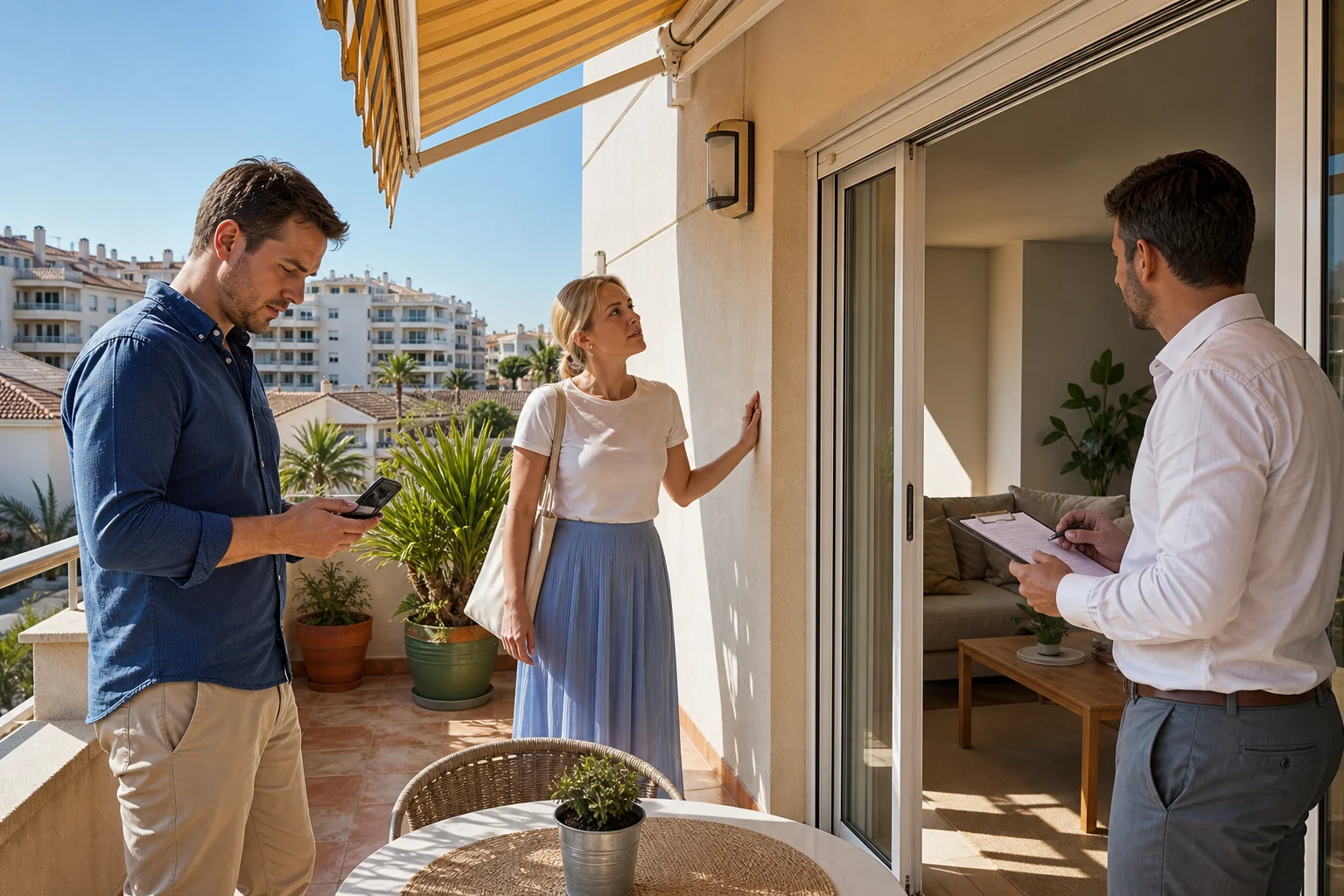
4. What should be checked about the property’s condition?
A tidy presentation does not establish the technical condition of a home. Look beyond decoration and ask about the age, maintenance and operation of the main installations.
- Do windows and doors open, close and seal correctly?
- Are there signs of damp, staining, cracking or previous repairs?
- How old are the electrical, plumbing, hot-water and climate systems?
- Have alterations been carried out, and can they be documented?
If the condition raises questions, consider an independent technical inspection before making a binding commitment.
5. Is the outdoor space private, practical and properly documented?
Terraces, patios, roof terraces and gardens often influence a buying decision in Aguas Nuevas. Clarify how the space is used, maintained and described in the property documentation.
- Is the space private, communal or for exclusive use?
- Who is responsible for maintenance?
- Are enclosures, awnings or additions reflected in the relevant documents?
- Does water drain correctly after rain?
Do not assume that a space shown with the property has the same legal status as the interior floor area. Ask for documentary confirmation where it matters to your decision.
6. How is the owners’ community managed?
When the property forms part of an owners’ community, the condition of the building and shared areas is only part of the picture. The rules, finances and recent decisions also affect ownership.
- What are the current community fees and what do they cover?
- Have any special assessments been approved or discussed?
- Are there rules affecting rentals, pets, alterations or use of common areas?
- What do recent meeting minutes say about maintenance or disputes?
The relevant documents should be reviewed before committing to the purchase. A visually attractive development can still require significant future maintenance.
7. What is the real condition of the pool, gardens and shared areas?
Shared facilities add value only if they match your priorities and are maintained sustainably. Walk around the full development rather than viewing the pool from one angle.
- Are paths, lighting, façades and access points maintained?
- Are pool opening periods and rules compatible with your intended use?
- Are there accessibility issues within the development?
- Do the shared facilities justify the ongoing costs for you?
A smaller, simpler community may suit one buyer better than a larger development with more facilities. The right answer depends on use, budget and maintenance preferences.
8. Do the description, floor area and property documents match?
Before moving forward, compare the marketed property with its registered, cadastral and physical description. The Spanish Land Registry’s nota simple identifies the registered property, ownership and recorded rights, charges or restrictions.
- Are the owners and property details consistent?
- Are parking spaces or storage rooms included and identified?
- Do extensions or layout changes require further checks?
- Are there registered charges or limitations that need explanation?

9. What can you learn about energy use and year-round comfort?
Ask to see the registered energy performance information and recent utility bills where available, but interpret previous consumption cautiously because it depends on occupancy and habits.
- How is the home heated, cooled and ventilated?
- What is the condition of windows, shutters and insulation?
- Where are the hot-water and climate systems located?
- Does the property feel comfortable in both sunny and shaded rooms?
The Generalitat Valenciana states that the energy certificate for an existing property must be registered before a sale or rental. Confirm the applicable documentation with the professionals handling the transaction.
10. What exactly is included in the proposed sale?
Do not rely on assumptions about furniture, appliances, parking, storage or outdoor items. Ask what is included, what will be removed and how agreed items will be recorded.
- Which furniture and appliances are included?
- Are air-conditioning units, awnings or outdoor storage part of the sale?
- Are a parking space or storage room separate registered elements?
- Will an inventory be attached to any agreement?
Clarity at this stage helps prevent disagreements later and makes property comparisons more accurate.
11. What are the likely ongoing costs?
The purchase price is not the complete cost of owning the property. Build a simple annual estimate using documents rather than general assumptions.
- Community fees and any approved special assessments;
- IBI property tax and other applicable local charges;
- Insurance, utilities and climate-system maintenance;
- Likely maintenance of terraces, gardens or private pools.
Tax, financing and transaction costs depend on the buyer and the property. Obtain personalised figures from the relevant advisers before making a financial decision.
12. What should happen before you sign or pay anything?
If the property remains a strong option, agree on a clear sequence for documentary review, technical questions, financing and any reservation or private contract.
- Which documents will be provided and by when?
- Which points still require legal or technical clarification?
- What is the proposed timeline and what conditions apply?
- Who should review any payment or agreement before it is signed?
A viewing can create urgency, but the next step should still be documented and understood. Do not sign a reservation, deposit or purchase document without knowing its obligations and obtaining the advice appropriate to your situation.
Compare evidence, not impressions
Write down the same points after every visit: location, layout, condition, outdoor space, community, documents, annual costs and unresolved questions. A consistent record makes it easier to separate a strong first impression from a property that genuinely fits.
For a wider introduction to the area, read our guide to living and buying property in Aguas Nuevas, then compare the properties currently available.
This content is for general information only and does not replace the legal, tax, technical, financial or notarial advice applicable to an individual property purchase.
Official sources consulted
- Torrevieja Town Council: municipal planning information
- Spanish Land Registry: property information and nota simple
- Generalitat Valenciana: energy performance certificate register
- Spanish Registrars: guide to buying a home
Are you looking for a property in Aguas Nuevas?
Tell us how you plan to use the home and which points matter most. We can help you organise the search and prepare viewings using a consistent set of criteria.